Loading...
 Code Scrapper
Transforming complex challenges into strategic digital opportunities through innovation and technical excellence.
From custom platforms to automated systems, Code Scrapper turns complex ideas into seamless digital experiences that make a difference.
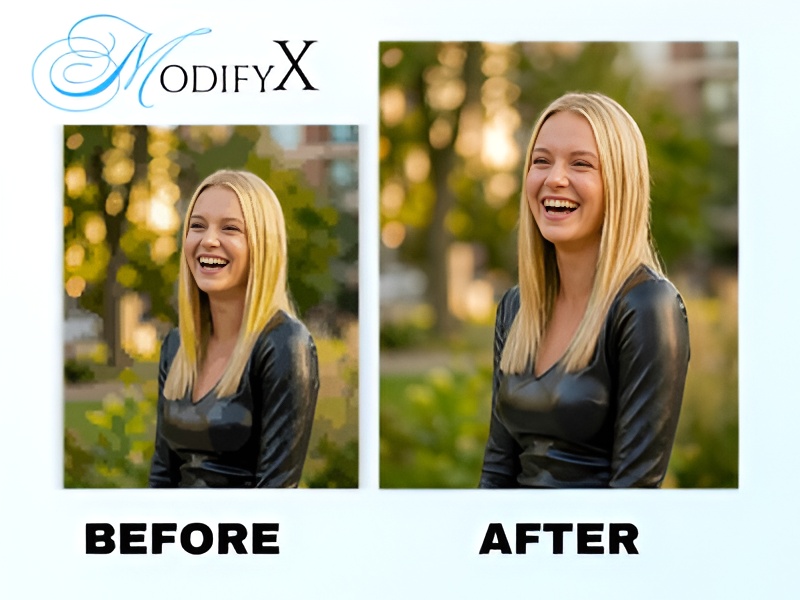
YOU CLICK A PERFECT PHOTO
BUT WHEN YOU OPEN IT LATER — IT'S BLURRY, DULL, LIFELESS
Now imagine fixing that in seconds.
1- No editing skills.
2- No expensive software.
3- No login.
Just a powerful AI image enhancer free that brings your image back to life — instantly.
An AI image enhancer uses machine learning to:
Unlike basic tools, an AI photo enhancer understands image structure — not just pixels.
Most tools out there:
❌ Require signup
❌ Limit free usage
❌ Store your data
❌ Work only online
✔ AI image enhancer free
✔ No signup required
✔ Data stays safe
✔ Works fast
✔ Can work offline after initial load
👉 That’s rare.
Your images are:
✔ Not stored permanently
✔ Not shared
✔ Not tracked unnecessarily
You can enhance images without worrying about privacy.
Fix blur and restore lost details using AI image quality enhancer
Improve clarity using AI image resolution enhancer
Automatically adjust tones
Once loaded → can work without internet in many cases
Try this AI image enhancer free now and transform your images instantly.
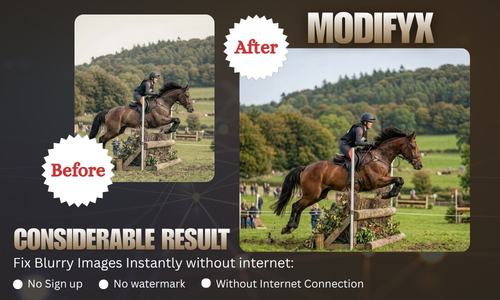
You upload an image, It looks fine on your phone.
But the moment you zoom in — it breaks.
1- Pixels everywhere
2- Blurry
3- Unusable
Now imagine this:
👉 You take that same low-quality image
👉 Upload it once
👉 And within seconds, it turns into crystal-clear 4K quality
And here’s the crazy part:
👉 It’s a free image upscaler online
👉 No signup required
👉 Your data stays 100% safe
👉 And once loaded, it can even work offline
Yes — that changes everything.
An image upscaler is a tool that increases the resolution of an image while maintaining or even improving its quality.
Traditional tools simply stretch pixels → result = blur
But modern AI tools?
They rebuild details
That’s why a powerful image upscaler online free doesn’t just enlarge images — it enhances them intelligently.
Let’s be real
Most people struggle with:
And when they try to fix it:
This isn’t just another tool.
This is:
✔ A free image upscaler online
✔ Works instantly
✔ No login required
✔ No watermark
✔ And surprisingly… offline capable
👉 First time you load the tool
👉 After that, many features can run without internet
This is something most tools don’t offer.
In fact, it’s rare to find an image upscaler 4K free that can work even partially offline.
Most tools:
❌ Upload your images to servers
❌ Store your data
❌ Track usage
But here:
✔ No signup
✔ No account needed
✔ Your images are processed securely
✔ No unnecessary data storage
That makes it a safe and private image upscaler online
Because it solves real problems:
✔ No technical skills required
✔ No cost
✔ No signup
✔ Safe usage
✔ Offline support
If you’re still struggling with blurry images…
👉 Try this free image upscaler online now
👉 Turn any image into 4K instantly
👉 No signup. No risk. No limits.
ModifyX Link:
https://modifyx.codescrapper.com/

The Death of Monoliths: Why Headless CMS + API-First + Composable Architectures Are Dominating Web Dev in April 2026
Hey builders! If you’re still running a traditional all-in-one CMS (think WordPress or older Drupal setups), 2026 is officially calling your bluff. Monolithic architectures — where content, presentation, and business logic are tightly coupled in one massive system — are dying fast. In their place? A flexible, future-proof stack built on Headless CMS + API-First design + Composable Architectures.
This isn’t hype. It’s the new baseline for any team shipping across web, mobile, IoT, or emerging channels. Real-time personalization, lightning-fast updates, and dynamic nested grids are now table stakes — and the winners are the ones who decoupled years ago.
Let’s break it down.
A headless CMS is content without the “head” (the frontend presentation layer). You manage content in a clean backend repository, then deliver it anywhere via secure APIs (REST or GraphQL). No more rigid templates tying your content to one website layout.
API-First takes it further: Every capability (content, search, personalization, commerce) is built as an independent, consumable service from day one.
The result? One source of truth for content that powers your marketing site, mobile app, in-store kiosk, partner portal — you name it — without duplication or rework.
In 2026, this is no longer “advanced.” It’s the practical default for any organization managing more than one digital channel. The headless CMS market is exploding (projected to hit billions by 2035), driven by omnichannel demands and AI-powered experiences.
Enter Composable (or MACH: Microservices, API-first, Cloud-native, Headless). Instead of one big monolithic platform, you snap together best-of-breed tools like Lego bricks:
Each piece is independently scalable, upgradable, and replaceable. A search outage doesn’t crash your checkout. A CMS update doesn’t require a full redeploy.
Teams love this because:
On the presentation side, micro-frontends are breaking up monolithic React/Vue/Angular apps into independent, team-owned modules. One team owns the product page, another the checkout — each deployable on its own schedule. No more merge-conflict nightmares at scale.
Pair that with Jamstack principles (pre-rendered markup + JavaScript + APIs, now evolved into edge-first, runtime-hybrid setups) and you get:
Yes, some say the “Jamstack” label is fading — but the idea (static + APIs + edge) has absolutely won. Real-time personalization? Handled. Complex nested grids (think drag-and-drop sections that adapt per user)? Trivial with component-based modeling.
Here’s where it gets exciting:
AI integration makes it even smarter — auto-generating variants, translating on-the-fly, or predicting what content converts best.
| Platform | Best For | Killer Feature |
|---|---|---|
| Sanity | Flexible, collaborative teams | Real-time editing + AI tools |
| Contentful | Enterprise omnichannel | Robust APIs + ecosystem |
| Strapi | Open-source lovers | Self-hosted, fully extensible |
| Hygraph | GraphQL-native complexity | Composable content hubs |
| Storyblok | Visual-first marketers | Component-based “slices” |
| Payload | Next.js-native devs | Runs inside your app router |
(Plus rising stars like Agility CMS and Kontent.ai for specific enterprise needs.)
Monoliths still work for tiny static sites… but for anything growing, they’re a maintenance tax waiting to explode.
Quick-Start Tip for Today: Audit your current stack. Pick one headless CMS (try Strapi or Payload for low friction), expose your content via GraphQL, and build a small micro-frontend proof-of-concept with Next.js. You’ll see the difference in your first sprint.
The composable era isn’t coming — it’s already shipping. Teams that embrace it are moving faster, iterating smarter, and delivering experiences that actually feel alive.
What’s your biggest monolith pain point right now? Planning a migration? Drop it below — happy to share real migration patterns I’ve seen working in 2026.
Stay composable,